Field note
Who Staffs a Merch Activation, and What Each Person Does
Presses are interchangeable. The crew standing behind them decides whether 400 guests leave happy.
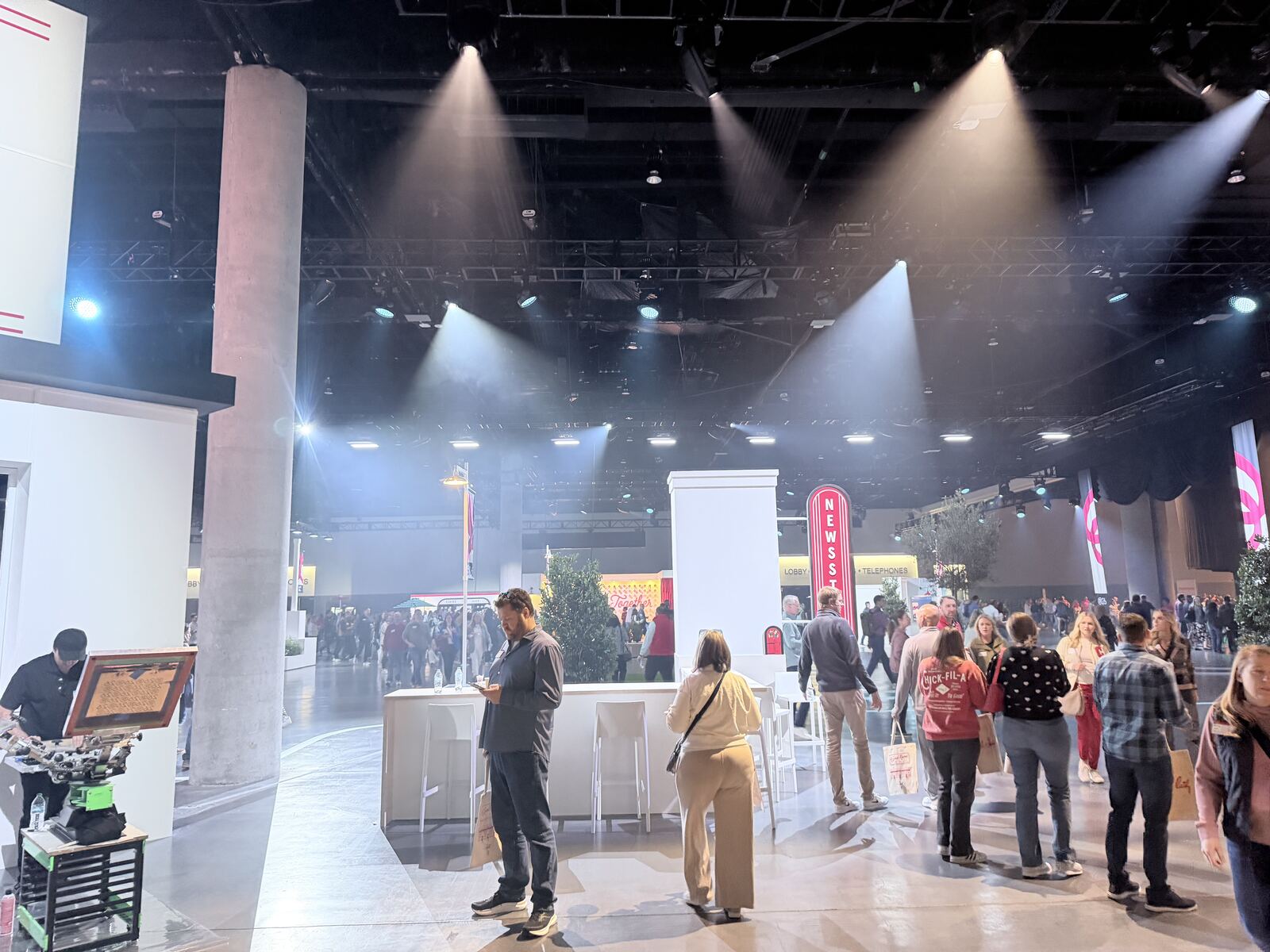
Most merch activation quotes list equipment in detail and staffing as a single line item. That is backwards. The presses are interchangeable; the crew is what decides whether 400 guests leave happy or 260 leave holding a claim ticket that never got called.
A merch activation staffing model is not complicated, but it is specific. Each role exists because something breaks when nobody is doing it. Here is what each person on a well-run station is actually responsible for.
The four jobs on any station
The lead. One per activation, regardless of size. They own the load-in appointment, the venue relationship, the power, the run of show and every decision that has to be made in ten seconds. They are also the person your producer texts. A lead who is chained to a press is not a lead, so on anything above a single station they should be hands-free for the peak hours.
The press operator. One per press, no exceptions. They align, press, peel, check and hand off, and the rhythm of that loop is what produces 60 to 90 pieces an hour on a DTF station. Every time an operator stops to explain the process to a guest, throughput drops for the next ten minutes, which is exactly why the next role exists.
The host. The front of the booth. They greet, explain the options, help with sizing, hand out claim tickets and manage the line. One host covers a single station comfortably and two stations at a stretch. This is the role most often cut from a budget and the one whose absence is most visible.
The finisher. On a busy station, somebody has to pre-stage blanks, keep the size table sorted, fold and bag finished pieces and call ticket numbers. On a slow day the host absorbs it. Above roughly 60 pieces an hour it becomes a real job.
How the count scales
- One station, up to about 250 guests. Three people: lead who also runs the press during quiet spells, operator, host.
- Two stations, 250 to 600 guests. Five: a hands-free lead, two operators, a host and a finisher.
- Mixed menu — press plus hat bar or embroidery. Add one per additional format. Embroidery in particular runs 6 to 12 minutes a piece and needs its own attendant, because guests will wait at the machine and want to talk while it stitches.
- Multi-day. Build in a floater. Day three of a trade show with no relief crew is where quality slips, and it slips on the finish work first.
Those ratios assume the crew is only doing merch. If the same people are also scanning badges, running a raffle or handling product demos, add someone or accept a slower line. Our planning guide walks through what each format demands.
The role most briefs leave out
There is a difference between a technician and a brand ambassador, and activations get into trouble when they expect one person to be both.
The technician cares about platen temperature, film peel and whether the queue is moving. The ambassador cares about the story, the VIP who just walked up, and whether the moment gets photographed. Both matter. Asking a press operator mid-rush to deliver a brand narrative to a journalist means one of those two things gets done badly.
The cleanest split we see: the vendor supplies the technicians and the lead, and the client supplies one or two of their own people for the front of the booth. Brand staff know the product and the guest list. Crew know the machine. Nobody is improvising.
If lead capture is part of the brief, name a person for it. A scanner sitting on a table gets used for the first hour and abandoned by the third unless somebody owns it.
Shifts, breaks and the hours nobody counts
Public hours are the smaller half of an activation day. Build is typically one to two hours before doors and strike is another hour after, and both are physical. When you compare quotes, check whether the staffing hours quoted are guest-facing or total on site — that single ambiguity accounts for a lot of the spread between bids.
Past about eight hours of public opening, plan real relief. A press station cannot simply pause for lunch when there is a line, so either the crew is large enough to rotate or you schedule a posted closure. A signed break in the run of show is far better than a station that quietly slows down at 2pm.
For anything multi-day, agree the call times in writing along with who has the venue keys, the dock code and the emergency contact. Crew size is the largest driver of a day rate, which is exactly why it deserves more than one line on a quote.
One page, sent the day before
Give every person on the floor the same single page. It takes ten minutes to write and removes almost all of the day-of questions.
- Address, dock entrance, parking, badge pickup, call time.
- Public hours, plus any scheduled pauses for speeches or photos.
- The design menu and which designs are locked to which garments.
- The size policy: one piece per guest or unlimited, and who is allowed to override it.
- Escalation. Who to find for a venue problem, a guest complaint or a power failure — by name and phone number.
Point five is the one that gets skipped and the one that matters at 4pm when a breaker trips. See what shapes an activation budget for how this fits the overall number.
Frequently asked questions
How many people does a merch activation actually need?
A single printing station runs properly on three: a lead, a press operator and a host working the front. Add a second station and you are at five, because the second press needs its own operator and the intake table needs a second pair of hands. Below three, somebody is always abandoning a job to answer a question.
Can our own brand ambassadors work the station?
Yes, and they are usually better at the brand conversation than a technician is. Keep them on the front of the booth greeting, sizing and capturing leads, and leave the press to the crew. Send them a one-page run sheet the day before so they arrive knowing the design menu and the size policy.
Does the crew count include setup and teardown?
It should. Build and strike are typically an hour or two on each end of the public hours, and they are the part of the day where an extra body saves the most time. When you compare quotes, check whether the hours quoted are guest-facing hours or total on-site hours, because that difference moves the number.
Tell us the run of show
Send the attendance, hours and format mix and we will come back with a crew list by role, not a headcount. Call (562) 614-4800 or start a brief.
Scope an activation
Put the plan to work.
Send the event, the audience, the city, and the date. We come back with a station plan, a throughput target, and a budget you can hand to the client.